
How to Start Forex Trading, One Step at a Time

The Trading Classroom
Written and reviewed by our editorial team · Updated June 2026

To start forex trading, learn the basics, practise on a demo account, then trade small with a regulated broker. Plan on 2 to 3 months of demo trading before you risk real money. A common first live deposit is 100 to 500 units of account currency, with risk kept under 1% of the balance per trade.
What you'll learn
 What you'll learn
Forex Trading in One Sentence
Every time you swap holiday money at an airport kiosk, you have technically traded forex. You handed over one currency, received another, and the rate you got decided whether you did well or badly. The professional version is the same idea, just faster and at much better prices.
The foreign exchange market (forex, or FX) is where currencies are bought and sold against each other. It is the biggest market on the planet, turning over well over 7 trillion US dollars a day, and it runs 24 hours a day from Sunday evening to Friday evening. Prices move because banks, companies, governments and traders keep changing their minds about what each currency is worth.
As a retail trader you are not swapping physical cash. You open a position with a broker, usually through a free platform called MetaTrader 5 (MT5), based on the idea that one currency will strengthen or weaken against another. If you are right, you profit. If you are wrong, you lose. There is no third option, which is exactly why the order of your first steps matters.
What You Actually Need to Start
The shopping list is short. A laptop or a phone, a stable internet connection, an account with a regulated broker, the MT5 platform (free to download), and a small amount of money you are genuinely prepared to lose. That is the whole list. No expensive course, no six monitors, no subscription to somebody's private signal group.
What you need in larger quantities is time and patience. Most people who quit in their first year quit because they expected results in weeks. Give yourself a realistic runway: a few weeks to learn the vocabulary, a few months on a demo account, then a small live account you treat as tuition rather than income.
One more thing that costs nothing: a written trading plan. One page is plenty. What you trade, when you enter, where your stop loss goes, how much you risk per trade, and when you stop for the day. Traders who write it down behave differently from traders who improvise, and your own trade notes will show you fairly quickly which one you are.

The Right Order of Steps (Do Not Skip Ahead)
Almost every beginner who wrecks an account does the same thing. They fund a live account on a Tuesday, place their first trade on a Wednesday, and by Friday they are frantically searching for what a margin call is. The order below is boring on purpose.
Step one is vocabulary. Before you touch a chart with real money you want to understand pips (the standard unit of price movement, 0.0001 on most pairs and 0.01 on yen pairs), lots (position size, where 1 standard lot is 100,000 units of currency), the spread (the gap between the buy and sell price, which is your cost of entry), leverage (buying power your broker lends you) and the stop loss (an automatic exit that caps how much a trade can cost you).
Step two is a demo account: a full MT5 account funded with fake money at real live prices. Step three is a live account so small that a bad week is annoying rather than damaging. Do not rush past demo because demo feels boring. Demo is meant to be boring. The goal is not a fake fortune, it is proving you can follow your own plan for 50 to 100 trades without improvising.
| Stage | What you do | Typical time | Money at risk |
|---|---|---|---|
| 1. Learn the basics | Pips, lots, spread, leverage, stop loss | 2 to 4 weeks | Nothing |
| 2. Demo account | Trade a written plan on MT5 demo | 2 to 3 months | Nothing |
| 3. Small live account | Same plan, 0.01 to 0.02 lots, real emotions | 3 to 6 months | Only money you can lose |
| 4. Scale slowly | Increase size only after consistency | Ongoing | Still under 1% per trade |

Ollie's tip
I kept a demo journal for three months before going live. Reading back my own bad excuses taught me more than any indicator ever did.
Choosing a Broker You Can Actually Trust
Your broker holds your money, so this is the one decision where being slow and slightly suspicious pays off. The most important filter is regulation. A regulated broker is licensed by a financial authority such as the FCA in the UK, ASIC in Australia, CySEC in Cyprus, or the equivalent authority in your own country.
Regulation does not mean you cannot lose money. You absolutely can. It means the broker must keep client funds separate from company funds, publish risk disclosures, and answer to somebody when things go wrong. An unregulated offshore broker offering 1:2000 leverage and a generous welcome bonus is offering you one thing only: a faster route to an empty account.
After regulation, compare the boring details. Spreads on the pairs you plan to trade, commission per lot, whether MT5 is supported, the minimum deposit, how withdrawals work, and how quickly a real human answers a support email. Test a small withdrawal early, while your balance is still too small to worry about.
Verify, do not trust
Every regulated broker publishes a licence number. Take that number to the regulator's own website (the FCA, ASIC and CySEC all run free public registers) and search it there, not on the broker's marketing page. If the company name, address or status does not match, walk away. It takes two minutes.
The Money You Should Never Trade With
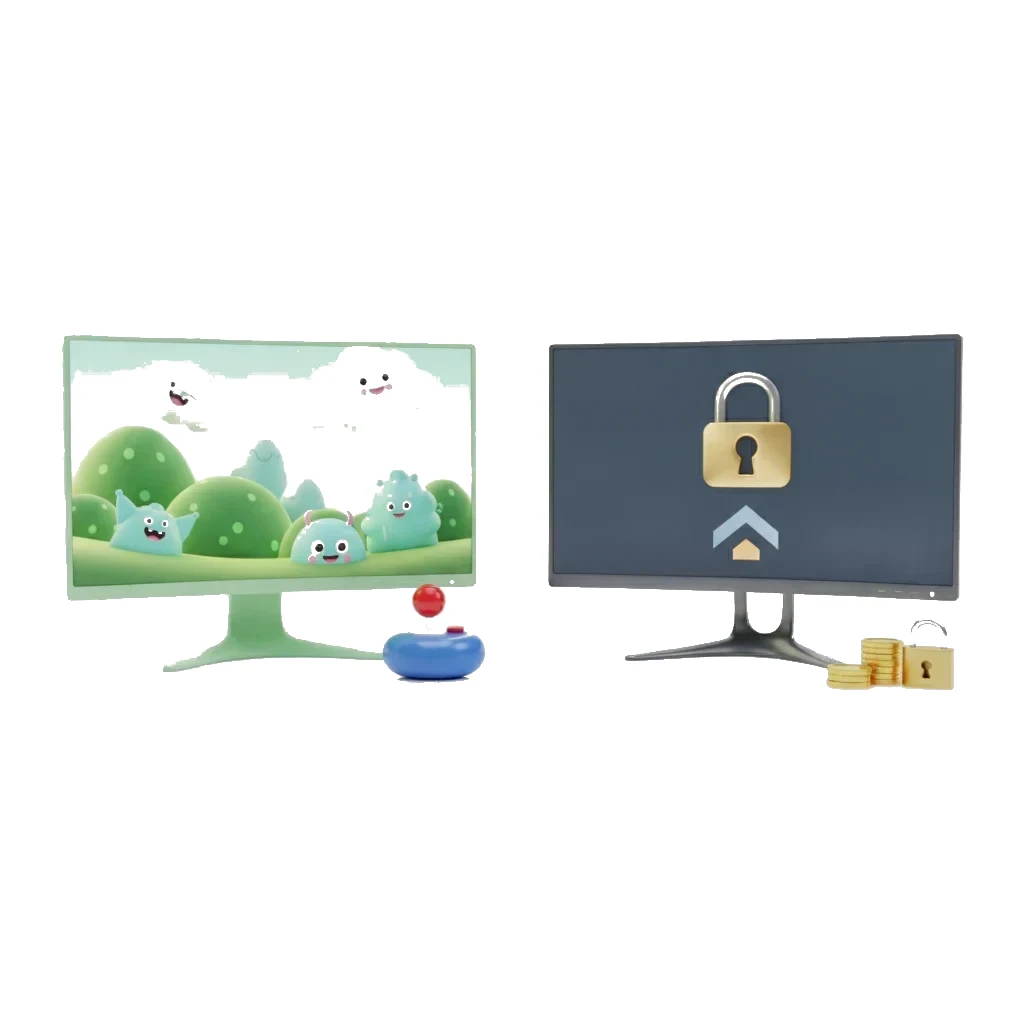
Here is the rule that separates traders who last from traders who have a short, expensive hobby: only trade money that could vanish completely without changing your life. Not rent. Not your emergency fund. Not borrowed money, and definitely not money on a credit card.
There is a practical reason on top of the obvious one. Money you cannot afford to lose makes you trade badly. You hold losing positions because accepting the loss feels impossible, and you close winners far too early because the profit feels too precious to risk. Fear quietly turns a decent plan into a random one.
A workable starting point for many beginners is somewhere between 100 and 500 units of their own currency. That is big enough to feel real and small enough that losing it is a lesson rather than a crisis. If that number would genuinely hurt, stay on demo longer. Nobody is holding a stopwatch.

Never fund an account with this money
Rent, food, tuition, your emergency savings, a personal loan, a credit card, or money someone else asked you to manage. If losing the entire balance would create a real problem in your life, the amount is too big, no matter how confident you feel about the trade.
Ollie's tip
If losing your starting deposit would change your month, it is too much. Shrink it. The market will still be here later, I promise.
What Realistic Looks Like (With the Maths)
Brokers regulated in Europe and the UK are required to publish how many of their retail clients lose money. The figure is usually somewhere between 70 and 80 percent. That is not a reason to avoid trading entirely, but it is an excellent reason to distrust anyone promising you 20 percent a month.
Here is what careful position sizing actually looks like. Say you have a 500 dollar account and you risk 1 percent per trade, so 5 dollars. You want to buy EUR/USD with a stop loss 20 pips below your entry. On EUR/USD, one micro lot (0.01 lots, or 1,000 units of currency) is worth about 0.10 dollars per pip. So a 20 pip stop on 0.01 lots risks 20 x 0.10 = 2.00 dollars.
Now divide your risk budget by that number: 5.00 / 2.00 = 2.5 micro lots. You always round down, never up, so you trade 0.02 lots. Your real risk is 2 x 2.00 = 4.00 dollars, which is 0.8 percent of the account. That position controls 2,000 euros of currency, and your broker sets aside a deposit called margin to hold it open: roughly 67 euros at 1:30, the retail cap on major pairs in the EU and the UK, or about 20 euros at the 1:100 some other jurisdictions still allow. The rest of your balance stays free, which is precisely the point.
Scale that up honestly. Risking under 1 percent per trade means a genuinely good month moves your account by a few percent, not double. That is the trade off nobody puts in an advert: the slow version is the one still running next year.
Ollie's tip
Small risk feels slow because it is slow. Slow is how you stay in the game long enough to actually get good.
Your First 30 Days, Step by Step
If you want something concrete to do tomorrow, start here. Week one: learn the vocabulary and read charts without placing a single trade. Pips, lots, spread, leverage, stop loss. Those five terms explain most of what confuses beginners six months later.
Week two: open a demo account with a regulated broker, install MT5, and place ten trades on a single pair. EUR/USD is the usual choice because it is liquid and cheap to trade. Write down why you entered and where your stop was, every single time, even when the reason is embarrassing.
Weeks three and four: write your one page plan and follow it for at least 30 trades. Then read your own notes back. Most beginners discover their problem is not the strategy at all, it is that they broke their own rules eleven times in a fortnight. Fix that before you fund anything with real money.
One line from a real trade log
'Monday 09:40. Bought EUR/USD at 1.0850, stop 1.0830 (20 pips), target 1.0890 (40 pips). Reason: price bounced off this level three times. Result: stopped out, minus 4 dollars. Note: I entered before the level actually held.' That last sentence is where all the learning lives.
Professor Ollie's Lesson

- Beyond a phone and an internet connection, you need three things to begin: a regulated broker, the free MT5 platform, and money you could lose without it changing your month.
- Respect the order: 2 to 4 weeks learning terms, 2 to 3 months on demo, then a small live account of roughly 100 to 500 units.
- Risk under 1% per trade. On a 500 dollar account that is 5 dollars, which works out at 0.02 lots with a 20 pip stop on EUR/USD.
- Check the broker's licence number on the regulator's own public register before depositing, and test a small withdrawal early.
- Brokers regulated in the EU and the UK must disclose that roughly 70 to 80 percent of retail accounts lose money, so treat any 20 percent a month claim as fiction.
Check yourself
Five quick questions on this lesson. Nothing is saved and nobody is watching.
You have a 700 dollar account and you risk 1 percent per trade. Your stop loss is 25 pips on EUR/USD, where one micro lot (0.01) is worth about 0.10 dollars per pip. What size do you trade?
Common questions
QHow much money do I need to start forex trading?
Many regulated brokers accept deposits of 100 units of currency or less, and micro lots (0.01) let you trade that size sensibly. A common beginner range is 100 to 500. The right amount is whatever you could lose entirely without it touching your bills. Starting bigger does not make you learn faster, it only makes each mistake more expensive.
QCan I start forex trading with no experience?
Yes, everyone starts with none. What matters is the order you do things in. Spend a few weeks on the core terms (pip, lot, spread, leverage, stop loss), then a few months on a free demo account where mistakes cost nothing, then go live small. Skipping that middle step is the most common and most expensive shortcut in trading.
QHow long does it take to learn forex trading?
The mechanics take a few weeks. Becoming consistently disciplined usually takes a year or more, and plenty of people never get there. A useful checkpoint: can you follow your own written plan for 50 to 100 demo trades without breaking a single rule? If not, more screen time is far cheaper than more capital.
QIs forex trading a good idea for beginners?
It can be a genuine skill worth learning, but it is not reliable income and it is not passive. Brokers regulated in the EU and the UK must disclose that most retail accounts lose money, typically 70 to 80 percent of them. Treat your first year as paid education, keep positions tiny, and only ever use money you can afford to lose.
Risk warning. Trading forex and CFDs carries a high risk of losing money rapidly due to leverage. This lesson is educational content, not financial advice. Professor Ollie is our teaching mascot. Lessons are written and reviewed by The Trading Classroom editorial team.